ESL Dynamic Pricing: How Electronic Shelf Labels Are Reshaping Real-Time Retail Pricing in 2026
Electronic shelf labels don't just replace paper tags - they unlock a pricing engine that responds to demand, competition, and inventory in real time. Here's what retailers need to know before, during, and after adoption.
What Is Dynamic Pricing, and Why Does It Need ESL?
Dynamic pricing is a data-driven strategy where product prices adjust based on real-time variables - demand fluctuations, competitor movements, inventory levels, time of day, or even weather patterns. Airlines have done it for decades. Amazon reportedly changes millions of prices every day. But for brick-and-mortar retailers, this strategy was stuck behind a practical wall: somebody had to physically walk the aisles and swap out paper tags.
That wall is coming down.
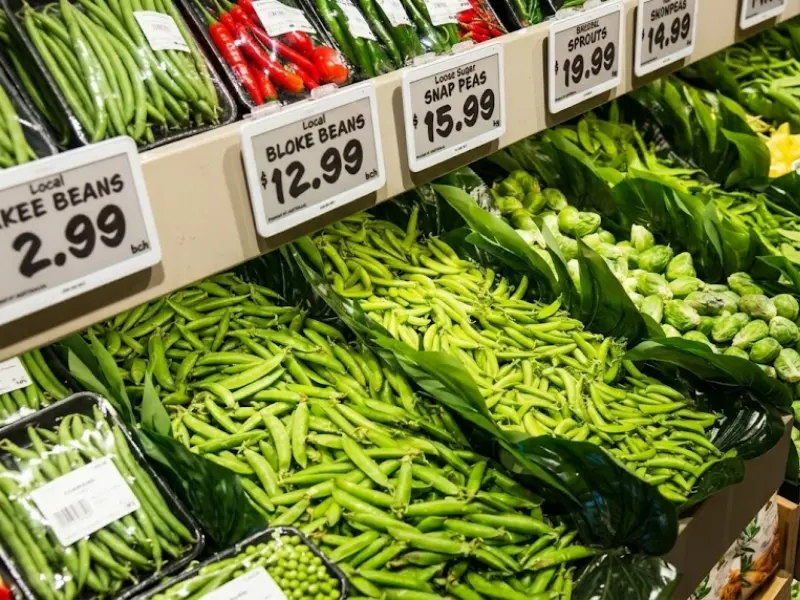
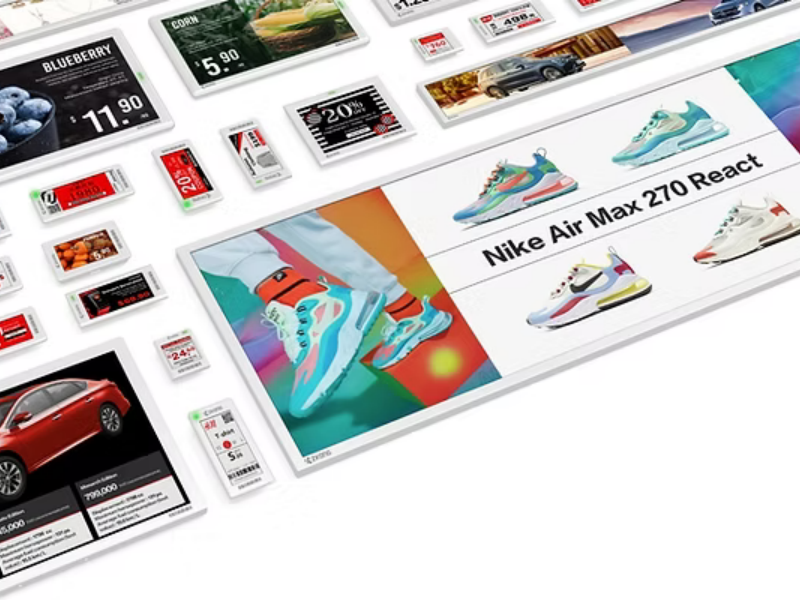
Electronic shelf labels (ESLs) - small, wireless e-ink or LCD displays mounted on the shelf edge - connect directly to a retailer's central pricing system. When a price changes in the POS, ERP, or pricing engine, the label updates within seconds. No printing, no walking, no lag. A full-store price sweep that once took two days now takes minutes.
This technological leap is what makes true dynamic pricing viable in physical retail for the first time. And adoption is no longer experimental. Walmart has committed to deploying digital shelf labels across 2,300 U.S. stores by 2026. Kroger, Amazon Fresh, Whole Foods, and major European chains like Morrisons and Co-op are either live or rolling out at scale. The global ESL market, valued at roughly $1.97 billion in 2025, is projected to reach $3.78 billion by 2030 at a 13.9% compound annual growth rate.
The question is no longer whether ESL-enabled dynamic pricing will arrive. It's how to implement it well.
How ESL Dynamic Pricing Actually Works: A Technical Breakdown
Understanding the mechanics matters because dynamic pricing with electronic shelf labels is not simply "changing prices faster." It's a closed-loop system where data, algorithms, and hardware operate in concert.
The Four-Layer Architecture
Layer 1 - Data Ingestion. Everything starts with data. A dynamic pricing system pulls inputs from multiple feeds: internal sales velocity and margin data from the POS or ERP, real-time competitor pricing from scraping tools or market intelligence platforms, current inventory and shelf stock levels, external signals such as weather forecasts, local events, or seasonal calendars, and historical demand elasticity models that predict how shoppers respond to price changes.
Layer 2 - Pricing Engine (The Brain). This is where AI and rule-based algorithms converge. The pricing engine processes ingested data against the retailer's business rules - minimum margin thresholds, competitive price-matching constraints, promotional calendars, and regulatory price floors. Modern engines use machine learning to optimize at the SKU level, predicting the price point that maximizes a chosen objective: revenue, margin, units sold, or waste reduction.
Layer 3 - Integration Middleware. The pricing engine's output must flow seamlessly into the ESL management platform. This middleware layer handles API communication between the pricing engine, the ERP/POS, and the ESL cloud platform. It ensures that the price displayed on the shelf, the price in the POS system, and the price on the retailer's e-commerce channel all match - what the industry calls omnichannel price integrity.
Layer 4 - The Shelf Edge (ESL Hardware). The electronic shelf label receives the updated price wirelessly via Bluetooth Low Energy (BLE) or Sub-GHz radio through an in-store gateway (access point). E-ink displays refresh with near-zero power draw, supporting battery lives of 5–10 years. Some advanced ESL models feature NFC for customer interaction and multi-color e-ink (black, white, red, yellow) that can visually distinguish sale prices, clearance items, or loyalty-member pricing.
This four-layer system is what separates genuine ESL dynamic pricing from the old model of "someone manually pushes a new price to a digital tag." Automation at every layer is what delivers ROI.
7 Dynamic Pricing Strategies Unlocked by Electronic Shelf Labels
With the infrastructure in place, what can retailers actually do with ESL-enabled dynamic pricing? Here are seven proven strategies, from the conservative to the cutting-edge.
1. Competitor Price Matching
Grocery and electronics retailers operate in fiercely competitive markets. With automated competitor price monitoring feeding into the pricing engine, ESLs can execute competitor-matched prices within minutes of a rival's change - rather than waiting for the next weekly pricing cycle. This keeps price perception strong without requiring a "lowest price guarantee" blanket policy.
2. Time-Based Markdown on Perishables
This is the strategy with the clearest, most measurable impact. A University of California study found that dynamic pricing of perishable goods can reduce food waste by up to 21%. As an item approaches its expiration date, the system automatically applies progressive markdowns - 10% off at three days remaining, 30% off at one day - displayed instantly on the electronic price tag. No manager intervention required. Spoilage drops, revenue recovers, and sustainability metrics improve.
3. Demand-Based Price Optimization
When a product is selling faster than expected, the engine can raise the price marginally to capture additional margin. When velocity slows, it can trigger a promotional price to stimulate movement. This isn't "surge pricing" in the rideshare sense - changes are typically small, algorithmic, and grounded in elasticity data. The goal is to find the optimal price point continuously, not to shock consumers.
4. Daypart and Event-Driven Pricing
A convenience store selling coffee can lower the price of pastries at 2 PM when the morning rush is over. A hardware store near a coastline can adjust plywood prices when a storm watch is issued. A grocery store using ESLs can launch a "happy hour" discount on prepared foods between 5 PM and 7 PM. With ESLs, these time-sensitive strategies can be pre-scheduled and executed automatically - the tags flip at the scheduled moment without any staff involvement.
5. Omnichannel Price Harmonization
Shoppers now routinely check online prices while standing in the aisle. A price discrepancy - $8.99 on the shelf but $7.49 on the retailer's own website - erodes trust faster than almost anything else. ESL dynamic pricing keeps all channels synchronized. When the e-commerce team adjusts a price, the shelf label reflects it within minutes, and vice versa. This is especially important for retailers offering buy-online-pick-up-in-store (BOPIS) services where the customer sees both prices in the same visit.
6. Localized Pricing by Store Cluster
Not every store operates in the same competitive environment. A downtown location competes with different rivals and serves different demographics than a suburban store 20 miles away. ESL systems managed through a cloud-based ESL solution enable retailers to maintain store-level or cluster-level pricing - something nearly impossible with centralized paper-label printing.
7. Loyalty-Tier and Personalized Shelf Pricing
Some advanced ESL technology supports NFC interaction where a loyalty member taps their phone against the tag to reveal a member-exclusive price. This merges the in-store shelf edge with the retailer's CRM, enabling personalized pricing without the public-facing controversy of showing different prices to different people on the same tag.
The Consumer Trust Problem - And How to Solve It
Dynamic pricing in physical retail carries a perception risk that doesn't exist online. When Amazon changes a price, most shoppers never notice. When the price on a grocery shelf changes between Tuesday and Thursday, people feel it.
This concern is real and politically visible. U.S. Senator Elizabeth Warren and then-Senator Bob Casey sent a formal letter to Kroger's CEO in September 2024 expressing concern that electronic shelf labels could facilitate surge-style pricing on essential goods. The fear - that a retailer might raise the price of water on a hot day or jack up ice cream prices during a heatwave - resonates with consumers who are already stressed by inflation.
But the data tells a different story. Researchers at the University of Texas at Austin published a study in 2025 finding no evidence of surge pricing at retailers using ESLs. As one researcher noted, the basic economics of grocery retail revolve around acquiring and retaining customers - risking consumer anger over marginal gains simply doesn't align with competitive grocery strategy.
Still, perception matters. Retailers deploying ESL dynamic pricing should follow three principles to protect customer trust:
Transparency first. Communicate clearly why ESLs are being introduced - faster markdowns, better accuracy, and reduced waste - not evasively. Customers who understand the "why" are far more accepting of the technology.
Downward flexibility is visible; upward adjustment is invisible. Use ESLs prominently for consumer-friendly price actions: flash sales, happy-hour discounts, loyalty pricing, and clearance markdowns. When prices increase (as they naturally do with supplier cost changes), ESLs make the transition seamless without drawing attention to it.
Price integrity is non-negotiable. The single biggest trust-builder is ensuring the shelf price always matches the register price. This is precisely what electronic shelf labeling does best - by syncing directly with the POS, it eliminates the "shelf says one thing, register says another" frustration that is one of the top consumer complaints in retail.
ESL Dynamic Pricing ROI: What the Numbers Say
The financial case for ESL-powered dynamic pricing rests on four pillars, each independently measurable.
Labor cost reduction. A typical supermarket with 20,000+ SKUs processes hundreds of price changes per week. With paper labels, each change requires printing, walking, finding the product, and swapping the tag. Industry data suggests this consumes 40–60 labor hours per week in a mid-sized grocery store. ESLs reduce this to near zero, freeing associates for customer-facing work.
Pricing error elimination. Manual label accuracy runs 92–95% in most retail environments. At 20,000 SKUs, that means 1,000–1,600 incorrect prices on the floor at any time. Each error is a potential compliance fine, customer complaint, or margin leak. ESL systems, synced to the central pricing database, maintain near-100% accuracy.
Margin optimization through dynamic pricing. Research by Revionics (now part of Aptos) showed that retailers combining AI price optimization with ESL execution achieved up to 33% more profit potential compared to those using static weekly pricing. The margin gain comes from responding to market signals in real time rather than on a fixed weekly cycle.
Formally, the incremental gross margin captured by dynamic pricing can be expressed as:
ΔGM = Σᵢ [ Pᵢ(t) × Qᵢ(Pᵢ, t) ] − Σᵢ [ P₀ᵢ × Q₀ᵢ ]
Where Pᵢ(t) is the AI-optimized real-time price for SKU i at time t, and Qᵢ(Pᵢ, t) is the predicted demand volume based on price elasticity at that moment. The first term represents the dynamically optimized revenue; the second represents the baseline revenue under static weekly pricing. For a typical mid-size grocery store operating 20,000+ SKUs, even a 1–3% lift in ΔGM translates to six-figure annual margin gains - compounding each quarter as the pricing engine refines its elasticity models with more data.
Waste reduction. For grocery retailers, perishable markdowns alone can drive significant ROI. Automated expiry-based markdowns reduce spoilage, recover revenue on items that would otherwise be discarded, and contribute to corporate sustainability goals.
Most industry sources indicate that a full ESL deployment achieves payback within 12 to 24 months. The cost of individual labels ranges from $6 to $25 depending on size, color capability, and NFC functionality - but total cost of ownership includes gateways, software licensing, and integration.
Hidden Costs: What the 12–24 Month Payback Estimate Often Leaves Out
The headline ROI figures are real - but they assume a clean integration path that many retailers don't have. In practice, budget an additional 30%–40% on top of hardware costs for the following often-overlooked line items:
Legacy ERP/POS integration. If your pricing data lives in an on-premise SAP or Oracle environment that lacks modern REST APIs, middleware development and custom API connectors can add $150K–$500K+ depending on store count and system complexity.
Annual SaaS licensing. Most ESL cloud platforms and AI pricing engines charge per-label or per-store annual subscription fees. Over a five-year lifecycle, software costs can equal or exceed the initial hardware investment.
Staff training and change management. Category managers, store associates, and IT support teams all need training on new workflows. Underinvesting here is one of the most common reasons Phase 2 rollouts stall.
Network infrastructure upgrades. Dense ESL deployments require robust in-store Wi-Fi and gateway coverage. Older stores may need access point upgrades or cabling work before a single label can go live.
Ignoring these costs doesn't save money - it delays ROI and creates internal resistance. The most successful deployments budget for total system cost from Day 1, not just the sticker price of the tags.
For a detailed cost breakdown, see our guide on electronic shelf label costs for retailers.
Choosing the Right ESL Hardware for Dynamic Pricing
Not all electronic shelf labels are built equally for dynamic pricing. The speed, connectivity, and display capabilities of the tag matter when you're changing prices multiple times per day rather than once per week.
Key Specifications to Evaluate
Refresh speed. For dynamic pricing, the label must update within seconds - not minutes. Look for systems that achieve full-store updates (10,000+ labels) in under 15 minutes. For an in-depth look at how refresh rates affect performance, see our guide on ESL refresh rates and display performance.
Communication protocol. Bluetooth Low Energy (BLE 5.0) is the current mainstream standard, offering a good balance of range, speed, and power efficiency. Sub-GHz radio provides superior penetration through dense shelf environments. Some retailers use a hybrid approach.
| Specification | BLE 5.0 | Sub-GHz (e.g., 868/915 MHz) | Infrared (Legacy) |
|---|---|---|---|
| Effective Range | 10–30 m | 30–100 m+ | 1–3 m (line-of-sight) |
| Shelf Penetration | Moderate - signal degrades through dense metal shelving | Excellent - low-frequency waves pass through obstacles effectively | Poor - requires direct line-of-sight to each tag |
| Update Speed (10K labels) | 10–15 minutes | 5–10 minutes | 30–60+ minutes (sequential) |
| Interference Risk | Moderate - competes with Wi-Fi, phones, and IoT devices on 2.4 GHz | Low - dedicated frequency band with minimal consumer device conflict | Very Low - optical, no RF interference |
| Battery Impact | Good - 5–8 year typical life | Very Good - 8–10 year typical life due to lower power per transmission | Moderate - receiver must remain active for polling |
| Best For | Most standard retail environments; strong ecosystem support | Large-format stores, warehouses, or stores with dense metal fixtures | Legacy installations; rarely recommended for new deployments |
Display type. Standard black-and-white e-ink is sufficient for basic pricing. For dynamic pricing where you want to visually distinguish sale prices, clearance markdowns, or loyalty offers, multi-color electronic shelf labels with red and yellow accents provide a significant visual advantage. For high-end or promotional contexts, LCD-based digital signage price screens offer full-color, video-capable displays.
Tag sizes. Dynamic pricing applies across all product categories - from small 2.66-inch tags for packaged grocery items, to 4.2-inch labels for general merchandise, to 5.8-inch displays for deli, bakery, and fresh departments where more product information is needed.
Battery life. E-ink labels that only draw power during refresh can last 5–10 years on a single coin cell battery. This is critical for total cost of ownership when deploying tens of thousands of tags per store.
NFC capability. If your dynamic pricing strategy includes loyalty-tier pricing or interactive product information, NFC-enabled tags allow customers to tap for personalized pricing, detailed product data, or direct-to-cart e-commerce integration.
For a complete comparison guide, see how to choose retail electronic shelf label solutions and our analysis of the best electronic shelf labels on the market.
ESL and the Circular Economy: Sustainability Beyond Waste Reduction
Most discussions about ESL sustainability focus on food waste - and rightly so. But in 2026, corporate ESG reporting standards and investor scrutiny demand a harder look at the environmental footprint of the ESL hardware itself.
A single large-format retail chain deploying ESLs across 2,000 stores may put 40 million coin cell batteries into the field. Those batteries have a 5–10 year lifespan, but when they die, they become electronic waste. The circuit boards, e-ink panels, and plastic housings add to the tally.
Retailers evaluating ESL vendors in 2026 should ask three sustainability questions that most RFPs still ignore:
Does the vendor offer a battery take-back or recycling program? Some manufacturers now offer end-of-life collection services and partner with certified e-waste recyclers. Others leave disposal entirely to the retailer. The difference directly impacts your annual ESG disclosure - and increasingly, your ability to meet the EU's Waste Electrical and Electronic Equipment (WEEE) directive requirements.
Is battery-free ESL technology viable for your deployment? A growing category of ESL hardware uses energy-harvesting technology - drawing power from ambient light, RF energy, or NFC tap events - to eliminate batteries entirely. These systems are still maturing, with trade-offs in refresh speed and display size, but they represent the long-term direction for retailers who want to eliminate battery waste at scale.
Does the label design support modular repair and component reuse? The most sustainable ESL isn't the one with the longest battery life - it's the one designed so that a depleted battery can be swapped without discarding the entire unit. Ask vendors about their Design for Disassembly (DfD) practices and whether their tags are built for component-level refurbishment.
In 2026, choosing an ESL vendor with a credible circular-economy roadmap is not just a "nice to have." It directly affects the retailer's annual ESG report, influences green financing eligibility, and - with the EU Digital Product Passport regulation now in force - may soon become a compliance requirement for the hardware itself.
Beyond the Tag: Amplifying Dynamic Pricing Across the Store
ESL-driven dynamic pricing doesn't exist in isolation. The most effective deployments integrate with a broader in-store digital ecosystem.
Digital Signage for Promotion Amplification
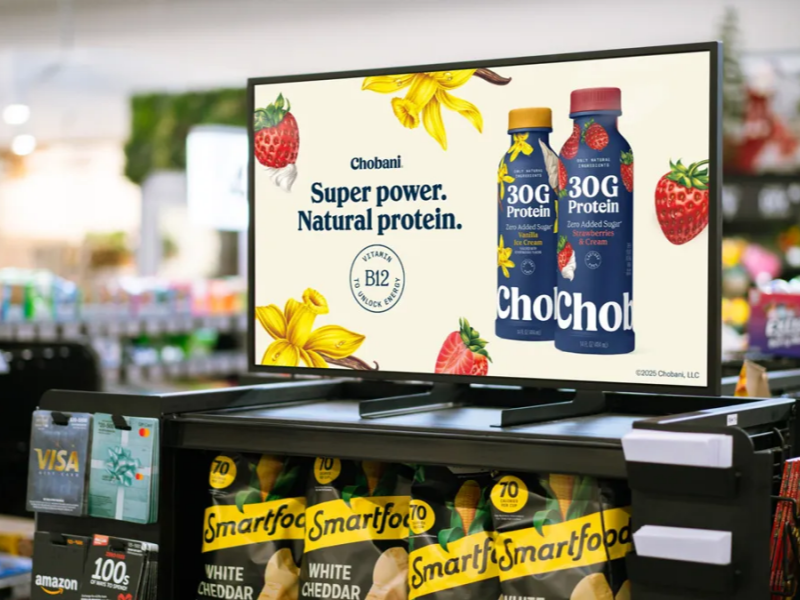
When your pricing engine triggers a flash sale or a time-based markdown, the message shouldn't live only on the shelf edge. LCD bar displays mounted on shelf rails, endcaps, or gondola headers can broadcast dynamic promotions in real time, synchronizing with the pricing system. A stretched bar LCD screen in a supermarket aisle can announce "Happy Hour: 30% off all prepared meals until 7 PM" the moment the ESL prices update.
Transparent Displays for Storefront Communication
For retailers with street-facing windows, transparent LED screens can advertise today's dynamic deals to passersby without blocking visibility into the store. This technology is especially powerful for retail storefronts where foot traffic conversion is a primary KPI.
Self-Service Kiosks for Price Verification
In a dynamic pricing environment, customers may want to verify or look up prices independently. Self-service touchscreen kiosks positioned at store entrances or key departments allow shoppers to scan a barcode and see the current price, any available promotions, and loyalty-member savings - all pulled from the same pricing engine that drives the ESLs.
This ecosystem approach - ESL + digital signage + transparent displays + self-service terminals - turns dynamic pricing from a back-end optimization into a visible, customer-facing experience that drives engagement and trust.
Regulatory Landscape: What Retailers Must Know in 2026
United States. There is currently no federal law prohibiting dynamic pricing in physical retail. However, legislative attention is increasing. Several state-level proposals aim to require price transparency disclosures when digital pricing systems are in use. Retailers should proactively ensure that ESL prices always match POS prices - this is already a legal requirement in most states, and ESLs actually make compliance easier, not harder.
European Union. The EU Digital Product Passport, entering force in 2026, will require real-time access to ingredient, sourcing, and recycling data at the point of sale. ESLs with NFC and QR capabilities are positioned to become the primary compliance mechanism for this regulation - meaning that ESL adoption in Europe will be driven not just by pricing efficiency but by legal mandate.
Consumer protection. Regardless of jurisdiction, the golden rule is clear: the shelf price must match the checkout price. ESLs, by eliminating the lag between system price changes and shelf label updates, reduce the risk of price discrepancies - which is actually a consumer protection improvement over paper labels.
Implementation Roadmap: From Pilot to Full Deployment
For retailers moving from consideration to execution, here is a practical phased approach to ESL dynamic pricing.
Phase 1 - Pilot (1–3 months). Select 1–3 stores. Deploy ESLs in a single high-frequency department (dairy, produce, or beverages). Connect to existing POS/ERP. Measure baseline metrics: labor hours for price changes, pricing error rate, markdown recovery on perishables, and customer complaints about price discrepancies. Start with a straightforward ESL installation in one department before expanding.
Phase 2 - Expand and Integrate (3–6 months). Roll out to all departments in pilot stores. Integrate a pricing optimization engine (AI-based or rule-based). Begin executing strategies: perishable markdowns, competitor matching, and promotional scheduling. Measure margin lift and waste reduction versus baseline.
Phase 3 - Scale (6–18 months). Deploy across all stores. Activate omnichannel price synchronization. Layer in advanced strategies: daypart pricing, localized pricing by store cluster, and loyalty-tier integration. Connect ESL pricing to in-store digital signage for coordinated messaging.
Phase 4 - Optimize (Ongoing). Refine pricing algorithms based on accumulated data. Expand the data inputs feeding the engine. Monitor consumer sentiment and price perception through surveys, social media, and in-store feedback. This is also the stage where the integration with digital signage solutions and self-service kiosks deepens to create a fully connected store.
Why Pilots Fail
Many ESL pilot programs deliver strong results in Phase 1 - then collapse in Phase 2 when scale introduces complexity. The most common killer is data silos: the ESL system updates prices correctly, but it's not connected to real-time inventory data.
The result? The pricing engine triggers a 30% markdown on strawberries to clear excess stock - but the store is actually out of stock. Customers see a great deal on the shelf, walk to the case, find nothing, and leave frustrated. Worse, if the promotion syncs to the retailer's app or website, it drives online orders that can't be fulfilled, creating a cascade of negative reviews and operational fire drills.
Before you move past Phase 1, verify these three integrations are live and bidirectional:
1. ESL ↔ Real-time inventory. The pricing engine must know current shelf stock, not yesterday's closing count. If your inventory system only updates overnight via batch file, your dynamic pricing is flying blind.
2. ESL ↔ POS. This is table stakes, but confirm that the sync is truly real-time (sub-minute), not "near real-time" on a 15-minute polling cycle. A 15-minute gap is long enough for hundreds of checkout transactions at the wrong price.
3. ESL ↔ E-commerce/app. If you offer BOPIS or same-day delivery, the online price must reflect the in-store dynamic price - and vice versa. A $2 discrepancy between your app and your shelf will generate more customer complaints than any benefit the pilot delivers.
If any of these integrations are incomplete, do not proceed to Phase 2. Fix the data pipeline first. A half-connected system is worse than no system at all - it creates pricing errors at machine speed instead of human speed.
Frequently Asked Questions
Is ESL dynamic pricing the same as surge pricing?
No. Surge pricing (like rideshare apps) applies large, short-term price increases during peak demand. ESL dynamic pricing in retail typically involves small, data-driven adjustments optimized for margin, competitiveness, and waste reduction. Major retailers including Walmart and Amazon have explicitly stated they have no plans to use surge-style pricing in their stores.
How fast can ESL labels update prices?
Modern ESL systems can update a single label in under 10 seconds and a full store of 10,000+ labels in under 15 minutes. The actual speed depends on the communication protocol (BLE vs. Sub-GHz) and the number of gateway access points installed.
What does an ESL dynamic pricing system cost?
Individual ESL tags range from $6–$25 per unit depending on size and features. A full system includes tags, gateway access points, cloud software, and integration services. Most retailers see ROI within 12–24 months - though total cost of ownership should include legacy system integration, annual SaaS fees, staff training, and potential network infrastructure upgrades (see the Hidden Costs section above). For details, read our ESL cost breakdown.
Does dynamic pricing make consumers angry?
Research shows consumers are more accepting of dynamic pricing than many retailers assume - especially when the changes are small, driven by genuine factors (expiration, promotions, competitor matching), and communicated transparently. What angers consumers is price inconsistency - shelf doesn't match register - which ESLs actually fix.
Can ESLs work with my existing POS and ERP?
Yes. Modern ESL platforms offer standard APIs and pre-built integrations with major systems including SAP, Oracle, Microsoft Dynamics, and most cloud-based POS platforms. The ESL solution architecture is designed to sit on top of existing infrastructure, not replace it. However, retailers running legacy on-premise ERP systems without modern API layers should budget for middleware development - this is one of the most underestimated cost and timeline items in ESL projects.
Which electronic shelf label manufacturers support dynamic pricing?
Most major ESL manufacturers offer cloud platforms capable of supporting dynamic pricing workflows. The differentiation lies in refresh speed, color display options, NFC capability, and the openness of their APIs for third-party pricing engine integration. See our guide on top electronic price tag brands for a detailed comparison.
What is the environmental impact of ESL hardware?
ESLs eliminate millions of paper labels annually, but the hardware itself - batteries, circuit boards, e-ink panels - has an end-of-life footprint. Retailers with ambitious ESG targets should evaluate vendors based on battery take-back programs, energy-harvesting (battery-free) options, and modular design that supports component reuse. As the EU WEEE directive increasingly applies to retail IoT devices, hardware sustainability is becoming a procurement requirement, not just a preference.
The Bottom Line
Dynamic pricing is not a future concept - it is already operating at scale in the world's largest retail chains. Electronic shelf labels are the hardware layer that makes it physically possible in brick-and-mortar stores, turning what was a two-day manual process into a real-time, automated system.
But hardware alone isn't enough. The retailers who will capture the most value from ESL dynamic pricing are those who invest equally in the data infrastructure, the pricing algorithms, the integration middleware, and - critically - the communication strategy that keeps consumers informed and trusting.
The shelf edge is where 90% of purchase decisions are still made. With ESL dynamic pricing, that shelf edge becomes the most responsive, data-driven, and profitable square foot in the store.
Ready to explore electronic shelf labels for your retail operation? Browse our complete range of ESL solutions, or request a quote for a customized deployment plan.